What It Is, Why It Happens, and Why It Keeps Coming Back
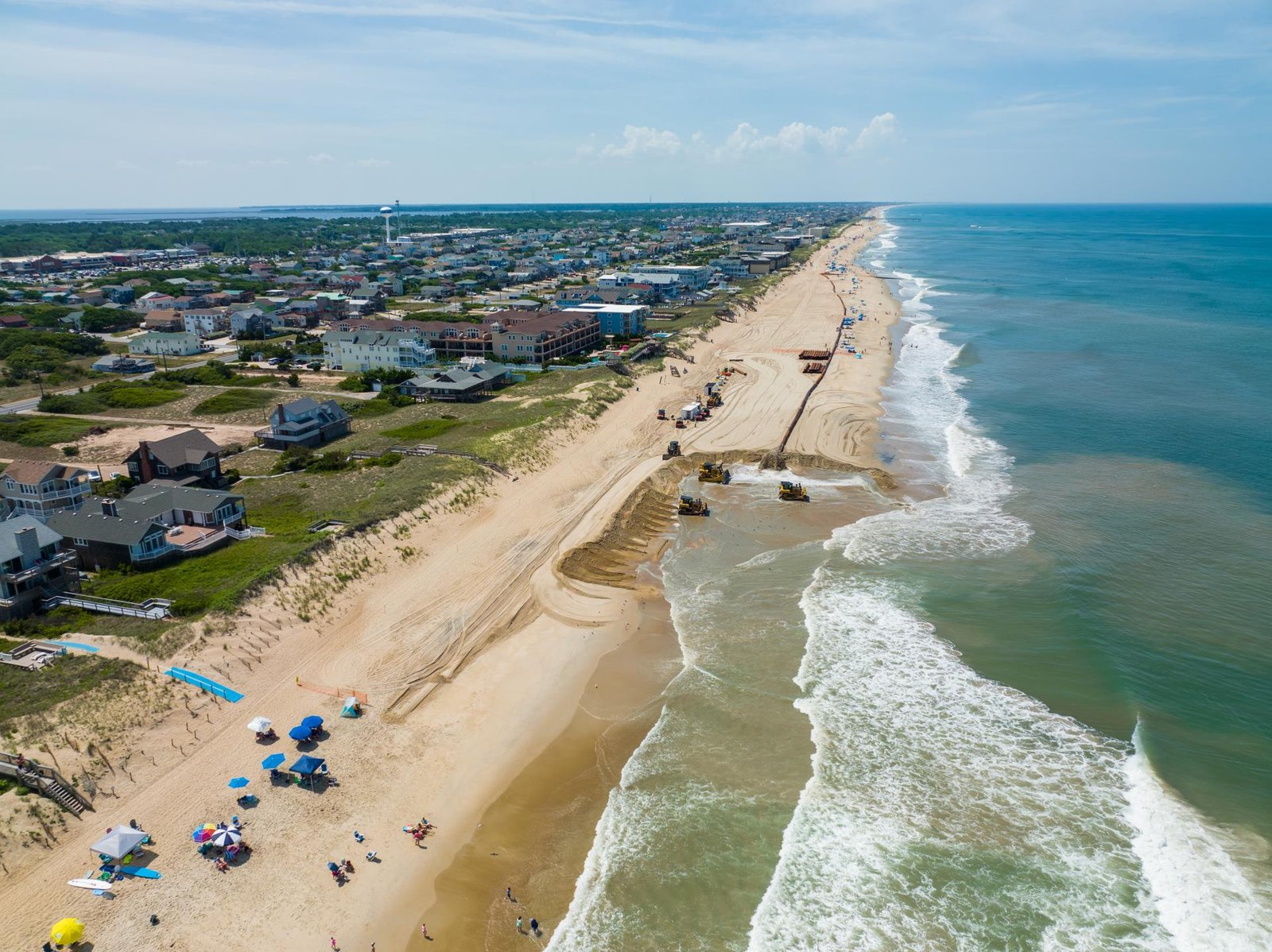
Between May and August 2026, a large-scale beach nourishment project is scheduled to take place along the Outer Banks, covering a stretch from 2919 South Virginia Dare Trail to 10435 South Old Oregon Inlet Road. This project is part of a long-running effort to rebuild and protect one of North Carolina’s most vulnerable coastlines.
What looks like a simple operation—moving sand onto a beach—is actually one of the most complex and debated coastal management strategies in the United States.
What Is Beach Nourishment?
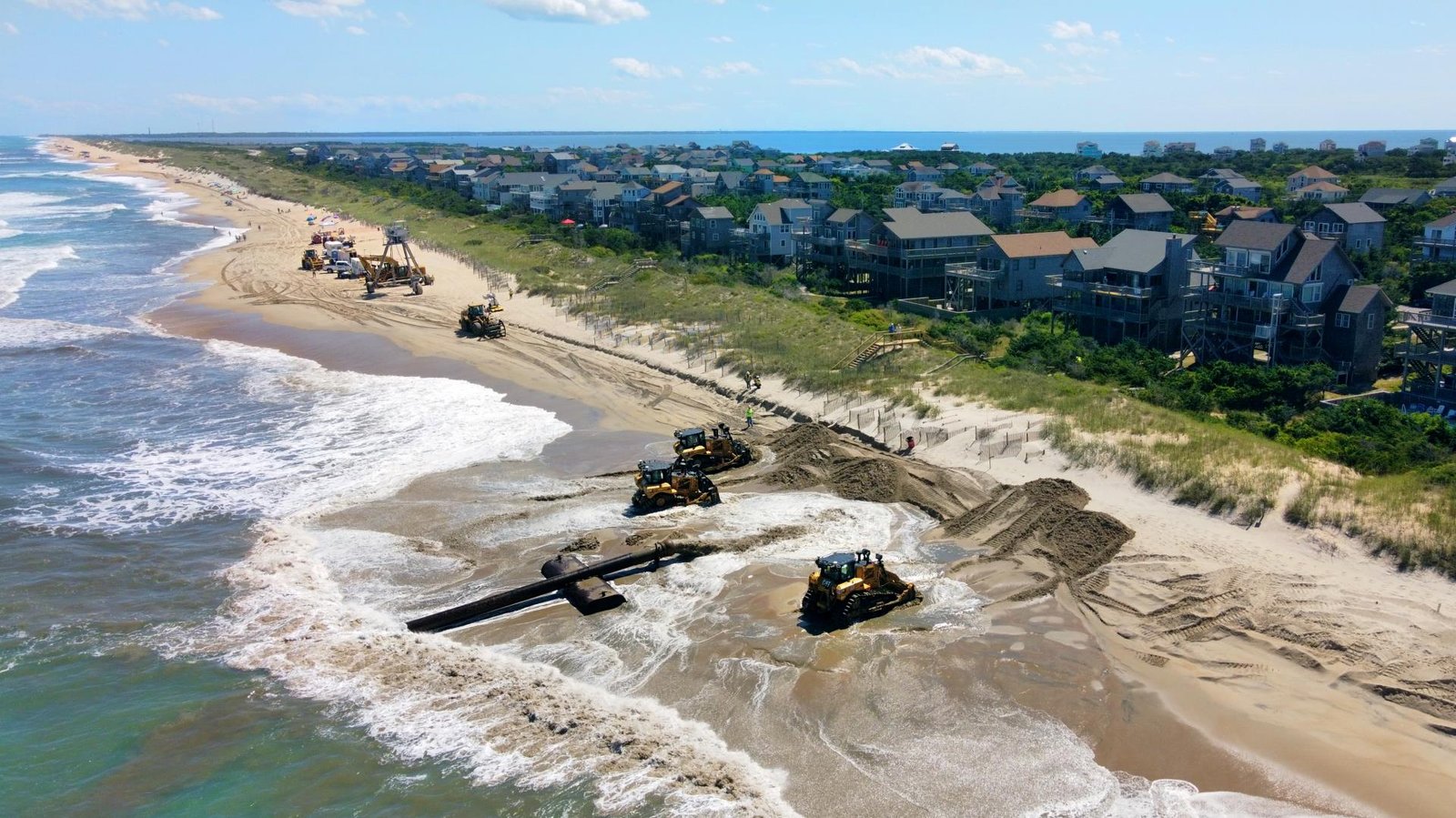
Beach nourishment is the process of adding sand to an eroding shoreline to rebuild and widen the beach.
Instead of building hard barriers like seawalls, engineers dredge sand from offshore or nearby sources and pump it onto the beach, reshaping the shoreline to create a wider, more stable buffer zone.
The sand typically comes from:
- Offshore ocean-floor “borrow sites”
- Nearby sandbars or shoals
- Inlets or dredged navigation channels
Once placed, the sand is graded and shaped to match a designed beach profile, often including dunes and berms built for storm protection.
Why Beach Nourishment Is Done
1. To Fight Coastal Erosion
The Outer Banks are barrier islands—naturally shifting strips of sand constantly reshaped by waves, tides, and storms.
Over time, these forces remove more sand than they deposit, causing beaches to shrink.
Beach nourishment slows this loss by replacing sand that has been washed away.
2. To Protect Homes, Roads, and Infrastructure
Without intervention, erosion doesn’t just remove beach—it threatens everything behind it.
- Oceanfront homes collapse
- Roads like NC Highway 12 become unstable
- Utilities and public access points are damaged
Officials state that without nourishment, erosion would worsen and critical infrastructure would be at greater risk.
A wider beach acts as a natural shock absorber, reducing the impact of storm waves before they reach buildings.
3. To Reduce Storm Damage
A nourished beach creates a buffer against:
- Hurricanes
- Nor’easters
- Storm surge
The extra sand absorbs wave energy, helping prevent:
- Dune collapse
- Flooding
- Structural damage
This is one of the main reasons these projects are often funded as storm risk reduction efforts.
4. To Support Tourism and Local Economy
The Outer Banks economy depends heavily on tourism.
A shrinking beach means:
- Less space for visitors
- Reduced rental value
- Lower local revenue
Beach nourishment helps maintain:
- Wide, usable beaches
- Property values
- Seasonal tourism flow
In short, it protects both the coastline and the economy.
5. To Maintain Environmental Balance
Unlike seawalls or hard structures, nourishment is considered a “soft” engineering solution.
It works with the natural system rather than blocking it:
- Sand moves naturally over time
- Habitats can recover more easily
- Long-term ecological impact is generally lower than hard barriers
How Often Beach Nourishment Happens
Beach nourishment is not permanent.
It is a cycle, not a one-time fix.
Typical timeline:
- Every 2 to 10 years, depending on erosion rates
- On the Outer Banks, many towns repeat projects roughly every 4–7 years
Examples:
- Duck, Kitty Hawk, and Kill Devil Hills: nourished in 2017, then again in 2022–2023
- Future maintenance already planned for 2027 in several towns
This pattern shows a key reality:
The sand will always move again.
Nourishment simply resets the clock.
Why the Outer Banks Needs It More Than Most Places
The Outer Banks is one of the most erosion-prone coastlines in the U.S.
Reasons include:
1. Barrier Island Structure
These islands are naturally unstable and meant to shift over time.
2. Strong Wave Energy
The Atlantic hits this coastline directly, with little protection.
3. Storm Frequency
Hurricanes and nor’easters accelerate erosion dramatically.
4. Rising Sea Levels
Higher water levels mean waves reach further inland.
In some areas, multiple homes have collapsed into the ocean in recent years, highlighting how fast erosion is happening.
How the Process Works (Step-by-Step)
- Survey & Engineering Design
Engineers map erosion and design the beach shape. - Dredging Sand
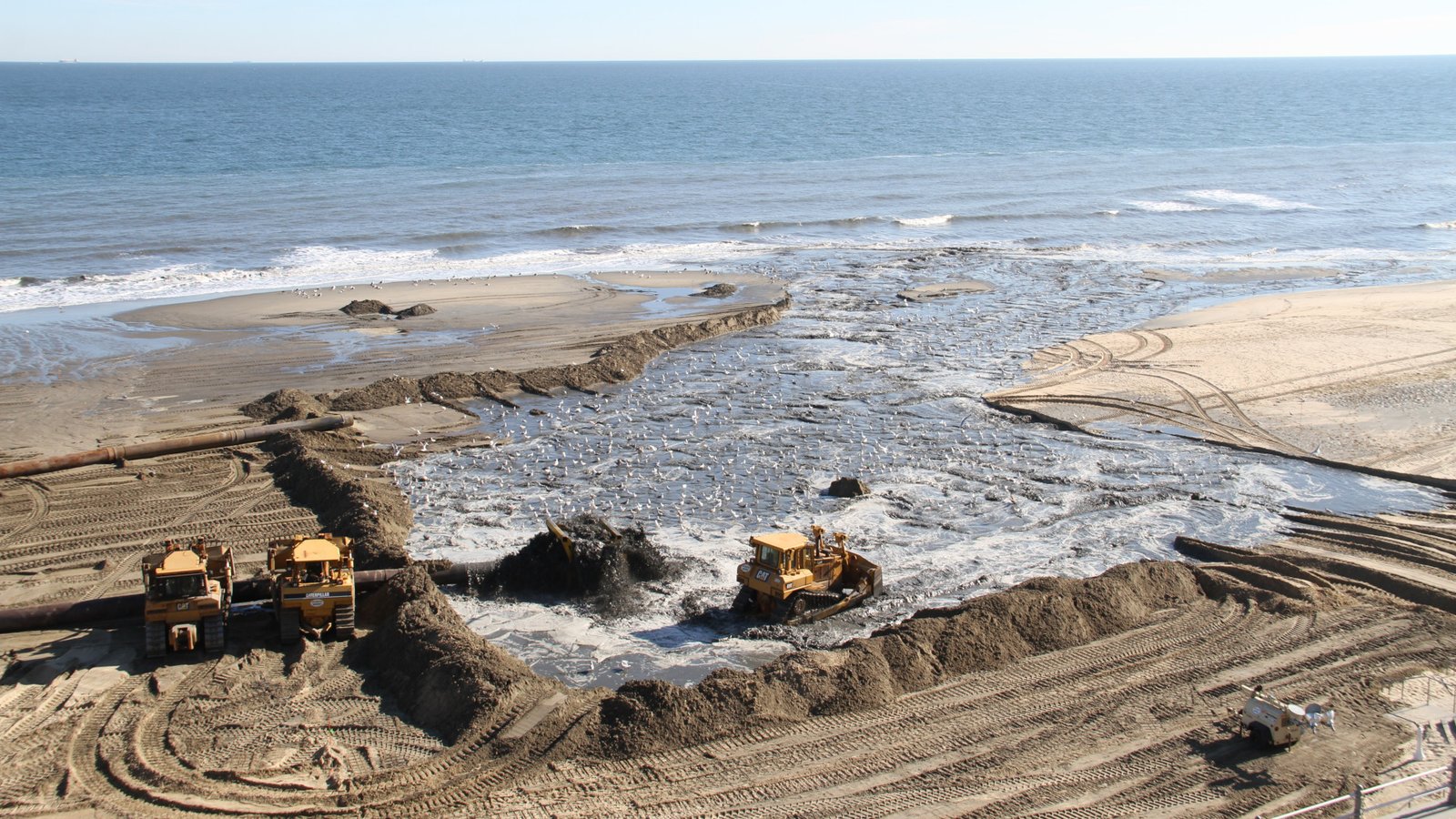
Large dredge ships collect sand from offshore sites. - Pumping Sand to Shore
Sand is pumped through pipelines onto the beach. - Shaping the Beach
Bulldozers spread and shape the sand. - Dune Restoration
Dunes may be rebuilt and planted with vegetation. - Ongoing Monitoring
Shoreline changes are tracked over time.
What to Expect During Summer 2026
For this specific project:
- Construction will run May through August 2026
- Work will move in sections along the shoreline
- Equipment will include dredges, pipes, and bulldozers
- Some beach areas may be temporarily restricted
However:
- Not all areas are closed at once
- Access is typically maintained nearby
The Pros and Cons
Benefits
- Protects homes and infrastructure
- Reduces storm damage
- Maintains tourism economy
- Preserves beach access
Downsides
- Expensive (millions per project)
- Temporary solution
- Sand can wash away quickly after storms
- Environmental disruption during construction
Some critics argue it’s a short-term fix for a long-term problem, especially as climate change accelerates erosion.
The Bigger Question: Is It Sustainable?
Beach nourishment has been used in the U.S. for over a century and is now one of the most common coastal protection methods.
But challenges are growing:
- Rising costs
- Limited sand resources
- Increasing storm intensity
- Ongoing maintenance needs
Communities face a difficult choice:
- Keep rebuilding the shoreline
- Or eventually retreat inland
For now, the Outer Banks continues to invest in nourishment because:
There is no widely accepted alternative that protects both property and the local economy at the same time
The Sand That Holds Back the Ocean
What It Is, Why It Happens, and Why It Keeps Coming Back
Between May and August 2026, a large-scale beach nourishment project is scheduled to take place along the Outer Banks, covering a stretch from 2919 South Virginia Dare Trail to 10435 South Old Oregon Inlet Road. This project is part of a long-running effort to rebuild and protect one of North Carolina’s most vulnerable coastlines.
What looks like a simple operation—moving sand onto a beach—is actually one of the most complex and debated coastal management strategies in the United States.
What Is Beach Nourishment?
Beach nourishment is the process of adding sand to an eroding shoreline to rebuild and widen the beach.
Instead of building hard barriers like seawalls, engineers dredge sand from offshore or nearby sources and pump it onto the beach, reshaping the shoreline to create a wider, more stable buffer zone.
The sand typically comes from:
Once placed, the sand is graded and shaped to match a designed beach profile, often including dunes and berms built for storm protection.
Why Beach Nourishment Is Done
1. To Fight Coastal Erosion
The Outer Banks are barrier islands—naturally shifting strips of sand constantly reshaped by waves, tides, and storms.
Over time, these forces remove more sand than they deposit, causing beaches to shrink.
Beach nourishment slows this loss by replacing sand that has been washed away.
2. To Protect Homes, Roads, and Infrastructure
Without intervention, erosion doesn’t just remove beach—it threatens everything behind it.
Officials state that without nourishment, erosion would worsen and critical infrastructure would be at greater risk.
A wider beach acts as a natural shock absorber, reducing the impact of storm waves before they reach buildings.
3. To Reduce Storm Damage
A nourished beach creates a buffer against:
The extra sand absorbs wave energy, helping prevent:
This is one of the main reasons these projects are often funded as storm risk reduction efforts.
4. To Support Tourism and Local Economy
The Outer Banks economy depends heavily on tourism.
A shrinking beach means:
Beach nourishment helps maintain:
In short, it protects both the coastline and the economy.
5. To Maintain Environmental Balance
Unlike seawalls or hard structures, nourishment is considered a “soft” engineering solution.
It works with the natural system rather than blocking it:
How Often Beach Nourishment Happens
Beach nourishment is not permanent.
It is a cycle, not a one-time fix.
Typical timeline:
Examples:
This pattern shows a key reality:
The sand will always move again.
Nourishment simply resets the clock.
Why the Outer Banks Needs It More Than Most Places
The Outer Banks is one of the most erosion-prone coastlines in the U.S.
Reasons include:
1. Barrier Island Structure
These islands are naturally unstable and meant to shift over time.
2. Strong Wave Energy
The Atlantic hits this coastline directly, with little protection.
3. Storm Frequency
Hurricanes and nor’easters accelerate erosion dramatically.
4. Rising Sea Levels
Higher water levels mean waves reach further inland.
In some areas, multiple homes have collapsed into the ocean in recent years, highlighting how fast erosion is happening.
How the Process Works (Step-by-Step)
Engineers map erosion and design the beach shape.
Large dredge ships collect sand from offshore sites.
Sand is pumped through pipelines onto the beach.
Bulldozers spread and shape the sand.
Dunes may be rebuilt and planted with vegetation.
Shoreline changes are tracked over time.
What to Expect During Summer 2026
For this specific project:
However:
The Pros and Cons
Benefits
Downsides
Some critics argue it’s a short-term fix for a long-term problem, especially as climate change accelerates erosion.
The Bigger Question: Is It Sustainable?
Beach nourishment has been used in the U.S. for over a century and is now one of the most common coastal protection methods.
But challenges are growing:
Communities face a difficult choice:
For now, the Outer Banks continues to invest in nourishment because:
There is no widely accepted alternative that protects both property and the local economy at the same time