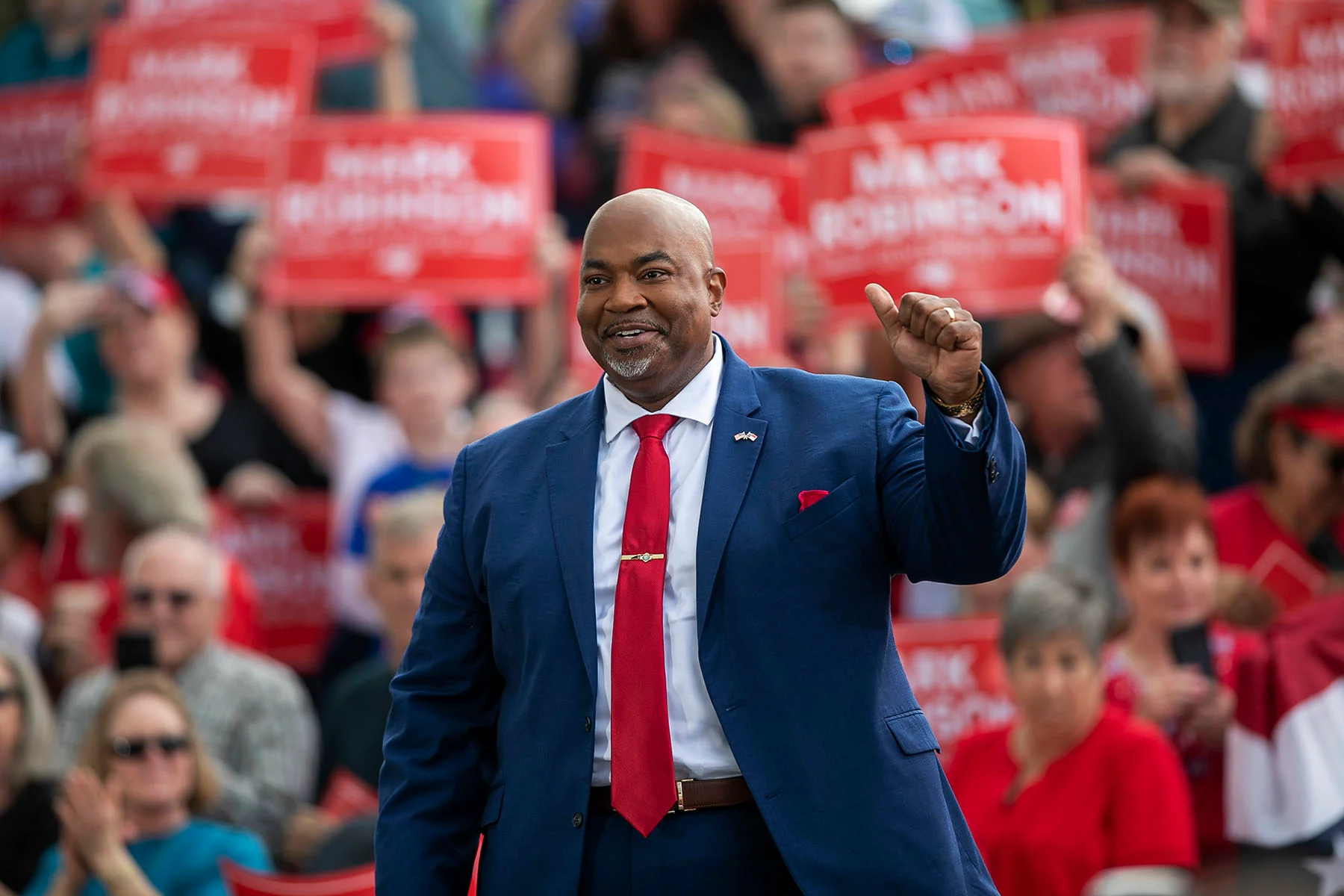
HIGH POINT, N.C. — In a newly released interview, former North Carolina Lieutenant Governor Mark Robinson publicly addressed the controversy that derailed his 2024 gubernatorial campaign, while also opening up about his personal struggles and past behavior.
He appeared on the debut episode of the YouTube series After The Call, where he spoke with host Josh Hall about his upbringing, his rise to political prominence, and the allegations that surfaced just weeks before the election—a controversy that contributed to his loss to Democrat Josh Stein.
A Campaign Rocked by Allegations
In September 2024, a report from CNN alleged that Robinson had posted explicit and controversial comments on adult forums in the early 2000s under the username “minisoldr,” which the network said it linked to him through multiple data points. The report included inflammatory statements and drew widespread national attention during the final stretch of the election. Around the same time, additional claims surfaced from a Greensboro-based individual who alleged Robinson had been a regular customer at an adult store where he worked decades earlier. Robinson initially denied the accusations and filed a defamation lawsuit against both parties. He later dropped the lawsuit and confirmed he would no longer pursue elected office.
Admitting Personal Struggles
In this latest interview, Robinson acknowledged long-standing issues in his personal life, particularly related to sex and pornography. “There are parts of those allegations that are absolutely true,” Robinson stated.
He described his younger years as a constant internal conflict between faith and personal behavior, calling himself “a dual person” trying to balance religious beliefs with what he referred to as a “carnal” lifestyle. Robinson admitted that these habits had lasting consequences, not only personally but professionally. “It can damage your mindset, your relationships, and your life overall,” he said. Robinson also suggested he may seek professional help, specifically mentioning interest in working with a therapist to better understand the root of his behavior.
Handling the Scandal During the Election
When asked why he denied aspects of the allegations at the time, Robinson explained that his decisions were driven by political pressure and timing. “I won’t say I completely lied—there were elements of truth,” he said. “But in that moment, the priority was protecting others and keeping the campaign focused.”
Robinson stated that addressing the situation fully during the final weeks of the campaign would have created broader political fallout, and he chose instead to continue fighting the narrative publicly. Despite hindsight, Robinson said he would make the same decisions again. “I’d handle it the exact same way,” he said, emphasizing that he believed the situation was bigger than himself and tied to larger political stakes.
Reflection and Accountability
Robinson acknowledged that some past statements attributed to him—while not always accurate—were rooted in real conversations or attitudes he once held. “I said enough things in the past where people could build a narrative around it,” Robinson admitted. He also reflected on how earlier life choices created instability later on, comparing it to building a structure without a solid foundation. “You can’t build something strong on a weak base. Eventually, it’s going to fall,” he said.
Looking Forward
Now stepping away from politics, Robinson framed his current phase of life as a reset—focused on personal growth, accountability, and rebuilding.
He compared his experience to overcoming addiction, stressing that change is possible but requires honesty and effort. “The real issue isn’t where you’ve been—it’s whether you stay there,” Robinson said. He ended the interview with a message directed at younger generations, warning that early decisions can have long-term consequences. “What you do now will follow you later. Every choice matters.”
Comments
Join the conversation.